
Шаблон
Крипто-терминал и уведомления о ценах
Крипто-терминал в Telegram: цены, графики, индикаторы, проверка контрактов и конвертер для любого токена, плюс уведомления, когда рынок двигается. Бесплатно — 2 уведомления, в Premium — 10.
Для кого: Для крипто-каналов, трейдинговых сообществ и проектов с токеном, которым нужен свой бот вместо пяти сайтов. Если нужны только уведомления о цене, начните с шаблона Simple Crypto Price Alerts.
- /add
- За какой монетой следить?₿ BitcoinΞ Ethereum◎ Solana✍️ Другая монета🏠 Меню
- ₿ Bitcoin
- bitcoin — какое уведомление нужно?📈 Рост на %📉 Падение на %🎯 Достижение цены🔀 Пересечение MA7/MA30📢 Всплеск объёма
- 🔀 Пересечение MA7/MA30
- ✅ Сохранено: bitcoin — пересечение MA7/MA30 (золотой или мёртвый крест) Цены проверяю каждую минуту, индикаторы MA/MACD и объём обновляются раз в 15 минут.➕ Ещё одно🔔 Мои уведомления🏠 Меню
Как выглядит диалог
- • BTC MA7/MA30 золотой крест ↗ — MA7 пересекла MA30 снизу вверх
- • ETH 📢 всплеск объёма — объём за 24 часа в 3,2 раза выше среднего за неделю
Как это работает
- Одно меню, по нажатию на каждый инструмент: цена, график, индикаторы, проверка контракта, конвертер, настроение рынка, уведомления, избранное.
- Напишите монету или вставьте контракт — «btc», «solana» или адрес из чата. Через секунду придёт карточка, а всё остальное будет в одно нажатие.
- Уведомление настраивается в три нажатия: выберите монету, выберите условие (рост на 5%, цена $70 000, пересечение MA, всплеск объёма) и подтвердите.
- Бот проверяет рынок каждую минуту. Как только цена дошла до нужного уровня, пользователь получает сообщение, а уведомление удаляется, чтобы не срабатывать повторно.
- Утром и вечером приходит дайджест: цены, индекс страха и жадности, монеты в тренде и главные новости дня.
- Бесплатно — 2 уведомления, в Premium — 10. Premium открывается за 100 Telegram Stars или за 3 приглашённых друзей — так бот сам приводит вам новых пользователей.
- Бот работает и в группе: короткие команды и вставленные адреса контрактов. Карточки обновляются на месте и не засоряют чат.
Что нужно для запуска
- Подключите бота: «Настройки» → «Боты» → вставьте токен от @BotFather. (Бота ещё нет? Отправьте /newbot в @BotFather и скопируйте токен из ответа.)
- Заполните botUsername в разделе «Переменные» — имя бота без @. Из него собираются пригласительные ссылки.
- Нажмите «Опубликовать». Пока вы этого не сделаете, бот не будет отвечать.
- Включите дайджесты: «Рассылки» → утренний в 9:00 и вечерний в 19:00 (UTC). После установки они выключены. Обновление рыночных данных (цены, новости, индикаторы) — это операции, они запускаются сами.
- Проверьте: отправьте /start, подождите минуту, пока загрузятся первые цены, и отправьте /price btc. Пришла карточка с ценой — значит, всё работает.
- Что ещё можно настроить: монеты для дайджеста (переменная trackedCoins), цену Premium (сумма в Telegram Stars в сценарии оплаты Premium) и работу в группе (в @BotFather: /setprivacy → Disable, затем добавьте бота в группу).
Подробности
Полезно знать
- Регистрироваться нигде не нужно. Цены, графики, новости, индекс страха и жадности и проверка контрактов берутся из бесплатных открытых источников. Без API-ключей и платы за данные.
- Цены загружаются централизованно и кешируются. Если сто человек одновременно спросят курс биткоина, бот сделает один запрос, а не сто.
- Уведомления у каждого пользователя свои и удаляются сами: бот сообщает один раз и снимает уведомление. Условия — изменение цены в процентах, уровень цены, пересечения MA и MACD, всплеск объёма.
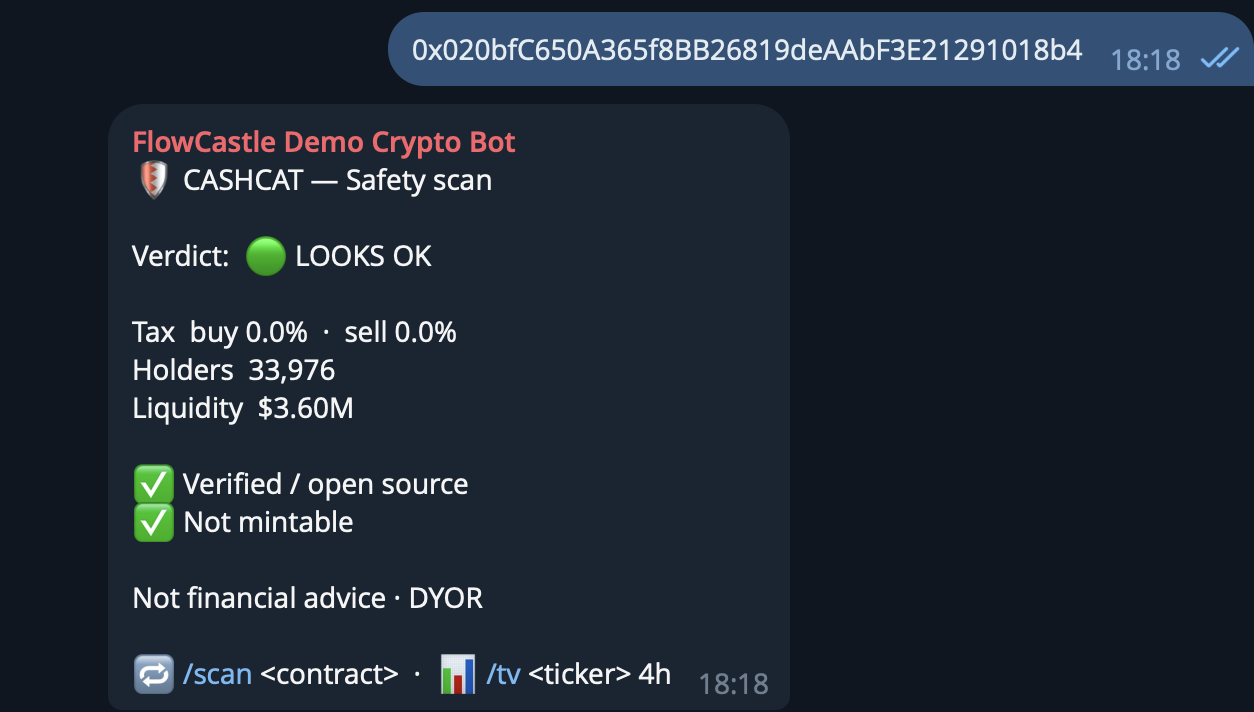
- Любой контракт в Ethereum, BSC, Base, Solana и ещё 40+ сетях можно проверить до покупки: ханипот, налог на продажу, возможность выпускать новые токены, права владельца.
- Оплата — в Telegram Stars: без платёжного провайдера и формы для карты, в два нажатия.
- Реклама — второй источник дохода: спонсорские сообщения (TomoAds) включаются одним переключателем на вкладке «Монетизация». Как работает реклама в боте
- После установки всё можно поменять: тексты, монеты, лимиты уведомлений, цену Premium и время дайджестов. Это настройки, а не код.
Частые вопросы
- Можно попробовать до установки? Да — @crypto_trends_robot работает на этом шаблоне. Отправьте /start или /price btc.
- На каком языке отвечает бот? Тексты бота в шаблоне на английском. После установки их можно перевести: каждое сообщение и кнопка редактируются.
- Нужны API-ключи или платный доступ к данным? Нет. Все источники бесплатные и открытые, а задачи, которые обновляют данные, уже входят в шаблон.
- Как на этом зарабатывать? Продавать места под уведомления в Premium за Telegram Stars, давать Premium за приглашения друзей и, если хотите, показывать спонсорскую рекламу на вкладке «Монетизация».
- Можно добавить бота в свою группу? Да — короткие команды работают в групповых чатах, а вставленные адреса контрактов бот распознаёт сам.
Что важно помнить
- Оставьте в результатах проверки строку «не финансовый совет · проводите собственный анализ». Бот сообщает, что делает контракт, но не ручается за токен.
- Не записывайте переменные контакта внутри операций, которые обновляют рыночные данные. Эти задачи выполняются без контакта, и такая запись обрывает запуск.
- Не повышайте бесплатный лимит уведомлений и не проверяйте цены чаще раза в минуту, пока не сверились с лимитами бесплатных API.
Сценарий этого бота
Это весь сценарий, который вы получите. После добавления шаблона можно изменить любое сообщение, кнопку и шаг.
Превью только для чтения · 36 сценариевОткрыть превью на весь экран ↗
Готовы собрать на этой основе?
Скопируйте шаблон в своё пространство и меняйте любое сообщение, кнопку и действие — ничего не заблокировано.