
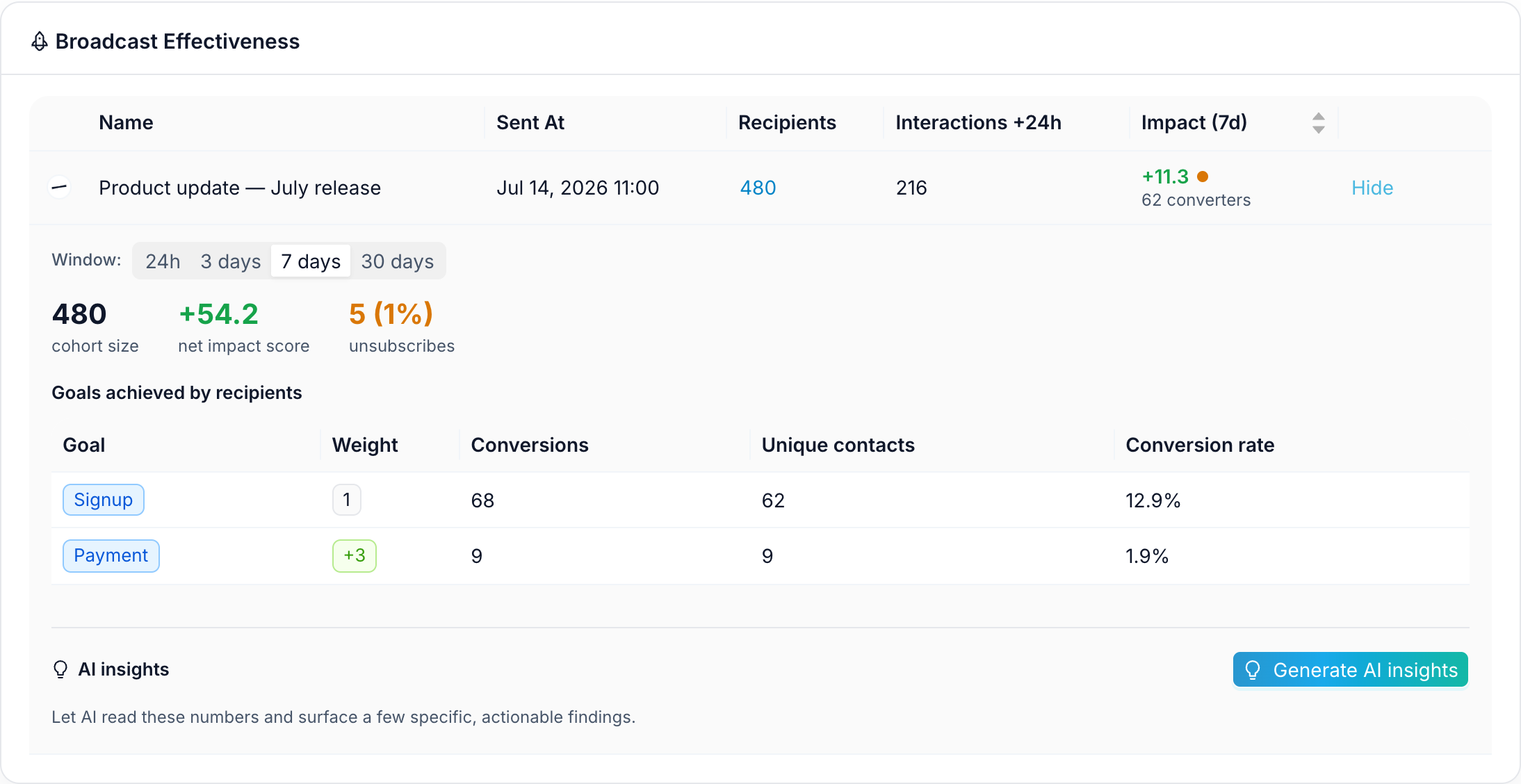
Most Telegram marketing tools answer one question well: how many messages went out. Sent, delivered, sometimes clicked — and that is where the reporting ends. Whether any of those sends produced a signup, a payment, or a booked call is left to guesswork.
That gap is why we built FlowCastle's marketing stack around goals instead of counters. This article walks through the four pieces — broadcasts, drip sequences, conversion goals, and AI insights — and shows how they connect, with real screenshots from the product.
Broadcasts that report conversions, not just deliveries
FlowCastle broadcasts do the expected things: one-off and scheduled sends, recurring campaigns, audience filters on any contact variable or past behavior, and A/B splits when you want to test copy.
The difference shows up after the send. Every broadcast is scored against the goals you define, so next to "delivered" you see the number that matters: how many recipients went on to convert, and which goal they hit. Instead of comparing two campaigns by open-rate folklore, you compare them by attributed conversions.
Drip sequences with per-step conversion
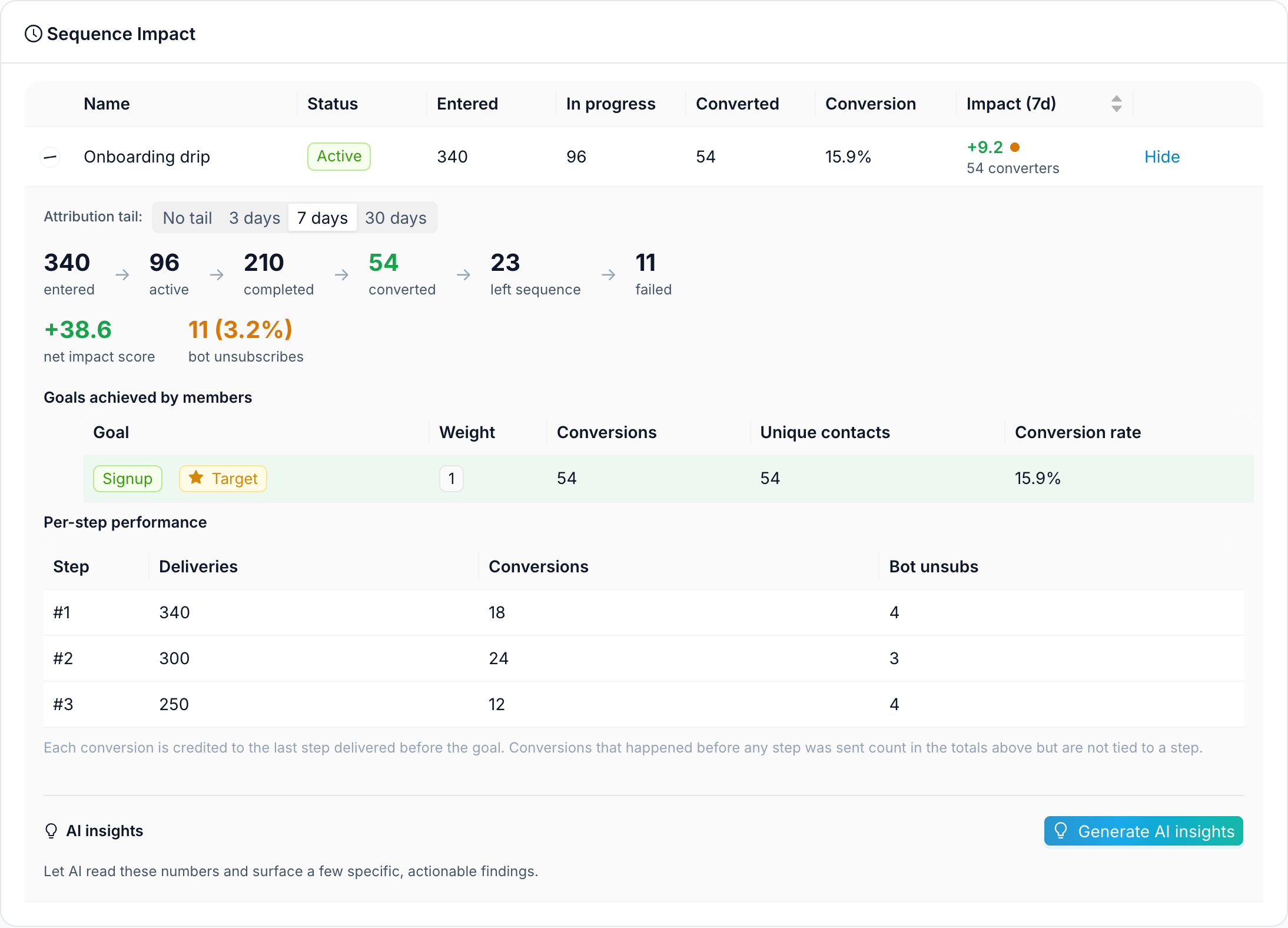
Sequences are timed drips: a contact subscribes (after a lead form, a purchase, a /start — any trigger you choose), then receives a series of messages on the schedule you set. Nurture flows, onboarding, winbacks, and re-engagement all run on the same machinery.
Each step reports its own conversion. A contact counts as converted when they hit the sequence's goal after entering it — so you see exactly which step does the work and which step readers ignore. When step 3 converts and step 4 doesn't, you shorten the sequence instead of guessing.
Goals: define what a conversion is
A goal is any event you care about: a button click, a completed payment, a submitted form — or something that happens outside Telegram entirely. FlowCastle's website tracking connects a visitor on your site to the same person in the bot, so "signed up on the website" can be a goal that a Telegram broadcast gets credit for. Tracked links carry the attribution: when a contact clicks a button in a broadcast and converts on your site, the chain from send to conversion is recorded, UTM source included.
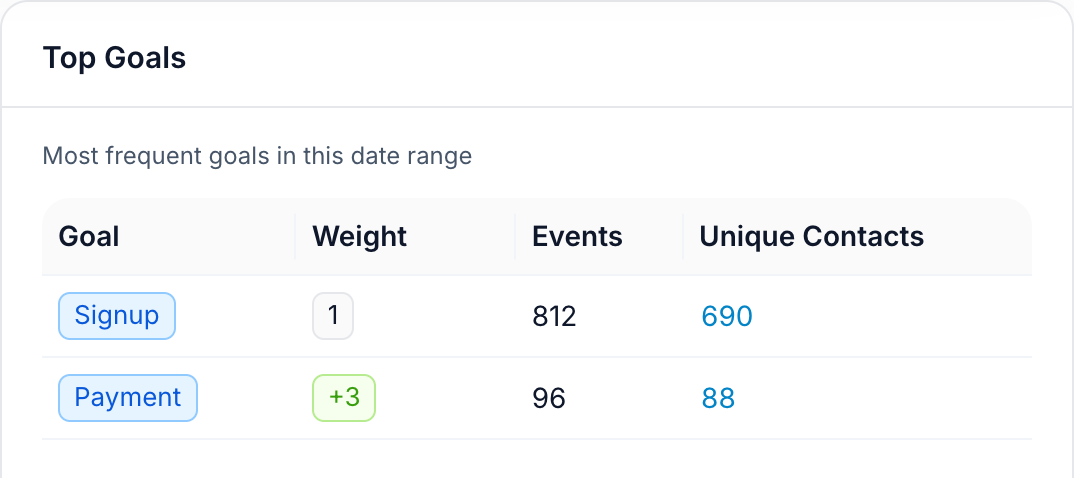
Goals also show up on contacts themselves — you can filter your audience by who converted and who did not, and use that filter in the next broadcast.
AI insights: the analysis you would do if you had time
Counting is necessary; interpreting is where teams stall. FlowCastle's analytics include AI-generated insight cards that read your funnel data and surface the findings a growth analyst would: which traffic sources bring contacts that actually convert, which sequence steps carry the conversions, where a funnel leaks, what changed since last period.
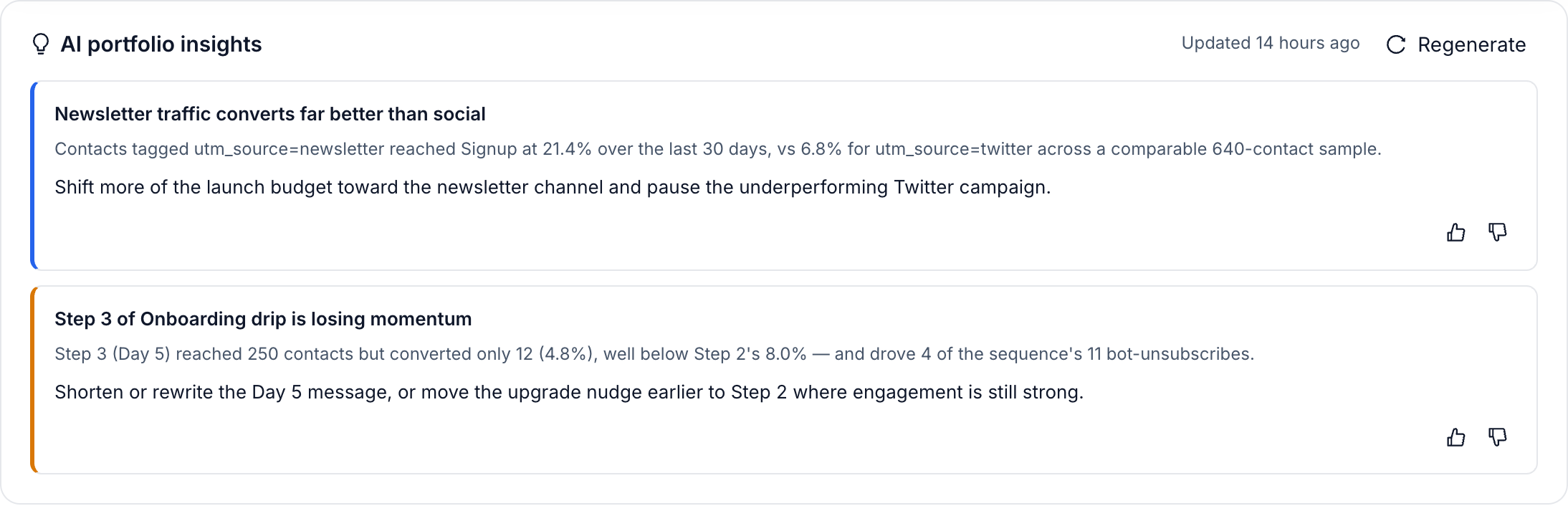
The point is not that AI writes a report. The point is that the underlying data model — every send tied to goals and sources — makes the analysis possible at all. Tools that only count sends have nothing to analyze.
How this compares to mailing-first tools
Dedicated mailing platforms are genuinely good at volume, and some bundle a sales CRM — we compare honestly in FlowCastle vs BotHelp and the broader Telegram bot builder roundup. The trade-off to understand is measurement: mailing-focused tools report on mailings, while FlowCastle reports on outcomes. If your marketing decisions come down to "did this campaign make money," the goal layer is the feature to look for.
FAQ
Can I track conversions that happen on my website, not in Telegram? Yes. The website tracking script identifies the visitor as the same person who talks to your bot, so on-site events (signup, purchase) become goals attributable to Telegram broadcasts and sequences.
Do sequences and broadcasts share the same goals? Yes — goals are defined once and every broadcast, sequence, and flow reports against them, which is what makes cross-channel comparison possible.
Does FlowCastle support A/B testing? Yes — random-split branches let you test message variants, and goal attribution tells you which variant converted rather than which one got more clicks.
Try it on your own funnel
The fastest way to see the loop is to run it: define one goal, send one broadcast, and watch the attribution land. Start from a ready-made template or explore the analytics feature page for a deeper look at the reporting.